
Free written scope consultation - allowances, timeline, and change-order rules on paper before a single trade is scheduled
American Standard Driveway & Pavers: The Ventura Owner’s Guide
American Standard doesn’t manufacture driveways or pavers. Not a single one. If you’re holding a paver with an American Standard stamp on it, or you’ve been told your driveway needs “American Standard parts,” someone has confused two completely different worlds: American Standard makes plumbing fixtures, toilets, and HVAC equipment. Driveways and pavers are built from concrete, asphalt, or interlocking paving stones made by companies like Belgard, Calstone, and Basalite. Here’s what actually matters for your Ventura home: a paver driveway runs $7,000 to $18,000 installed, concrete comes in at $4,500 to $12,000, and sealing runs $250 to $700. If a paver has cracked, shifted, or sunk, the “part” isn’t a brand-name component at all. It’s the base underneath it. That’s the repair most Ventura homeowners actually need.
We see this confusion often enough that it’s worth addressing head-on: you won’t find an American Standard paver catalog because none exists. What you do have is a driveway or walkway system made of specific materials, and it either gets repaired correctly or it fails again in two years. That’s where we come in. Sawyer Remodel Ventura isn’t affiliated with American Standard, but we know paving systems the way we know framing and tile – by the substrate, the drainage, and the load.
How to Identify What Your Driveway Actually Needs
Before anyone quotes a price, you should know what’s under your feet. Most Ventura driveways fall into one of three camps: poured concrete, asphalt, or segmental pavers (the interlocking stones). Each fails differently and each has its own repair path.
Concrete driveways crack from expansive clay soil, tree roots, and the temperature swings between Ventura’s coastal fog mornings and inland heat. Hairline cracks are cosmetic. Cracks wider than a quarter-inch that are uneven on either side mean the slab is moving, and patching alone won’t hold. Asphalt oxidizes in the Southern California sun, turning gray and brittle, then alligators from water penetration. Pavers rarely break on their own – what fails is the compacted base beneath them, causing sinkage, shifting, and edge separation. The paver itself is almost never the problem. The base is.
If you’re trying to match an existing paver for a spot repair, bring the stone itself to a Ventura masonry yard. Color matching from a photo is a fool’s errand because pavers weather and fade, especially under coastal sun. A two-year-old paver won’t match a twenty-year-old one, no matter what the manufacturer label says.
Styles & brands we work with
- Kitchen remodeling
- Bathroom remodeling
- Home additions & ADU
- Roofing
- Windows & doors
- Driveway & pavers
- Fence
Signs Your Driveway or Paver System Is Failing
- Standing water after it rains. Water pooling means the slope is gone or the base has settled. In Ventura, where winter brings real rain and summer brings none, a driveway that doesn’t drain is quietly washing out its own sub-base every wet season. Fix the grade, don’t just seal it.
- Pavers rocking underfoot. A paver that moves when you step on it has lost edge restraint or its bedding sand has migrated. This is the earliest warning sign of a failing base, and it’s cheaper to fix now than after a full section sinks.
- Concrete cracks with one side lower than the other. Differential settling means the slab has fractured and the ground underneath shifted. Mudjacking or slab replacement are the real fixes. Caulk is a band-aid and it’ll fail.
- Asphalt that looks gray and starts crumbling at the edges. The binder is gone from UV exposure. Edge raveling is the first structural surrender. By the time you see alligator cracks, water has compromised the base and a simple overlay won’t save it.
- Tree roots lifting any paved surface. Ventura has mature ficus, oak, and sycamore roots that destroy pavement. Roots win every time unless you address them, which means either root barriers, root pruning, or accepting that some tree and driveway combinations aren’t compatible long-term.
See the difference
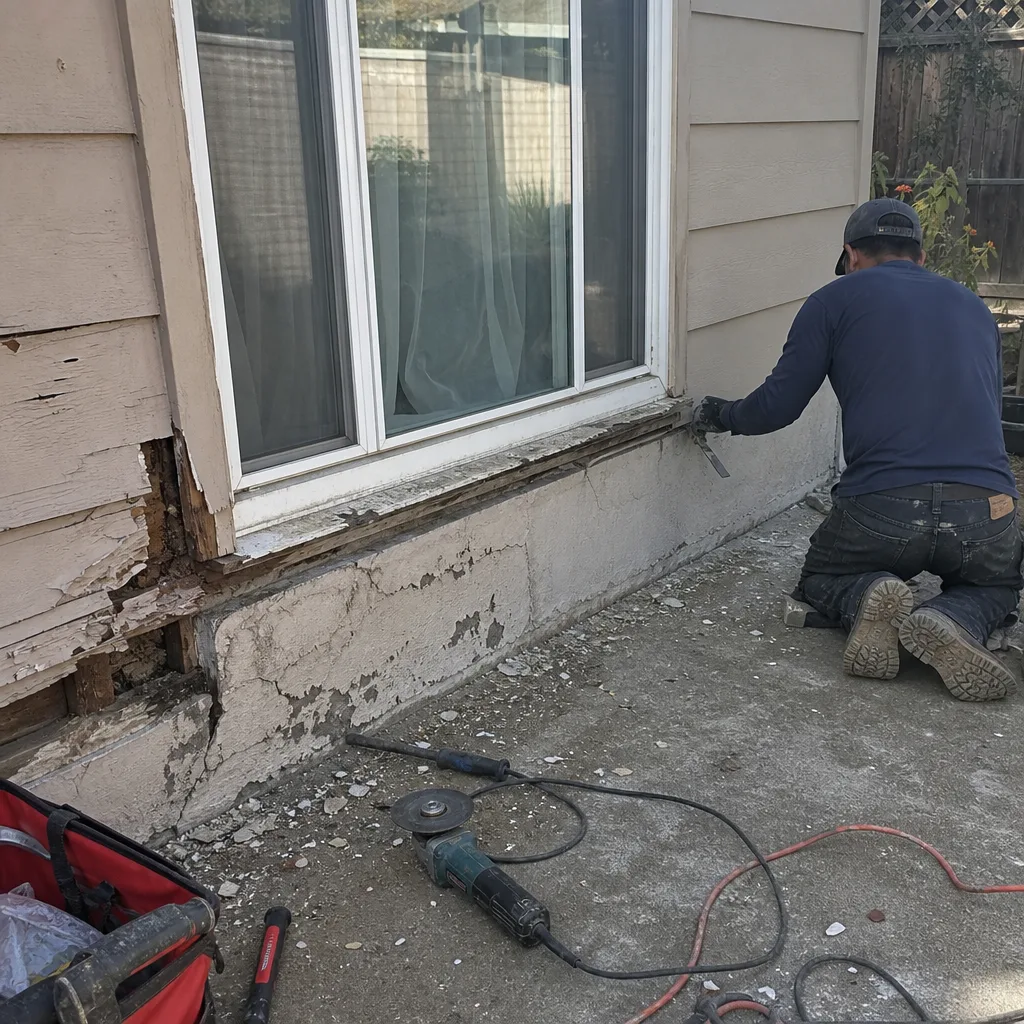 Before
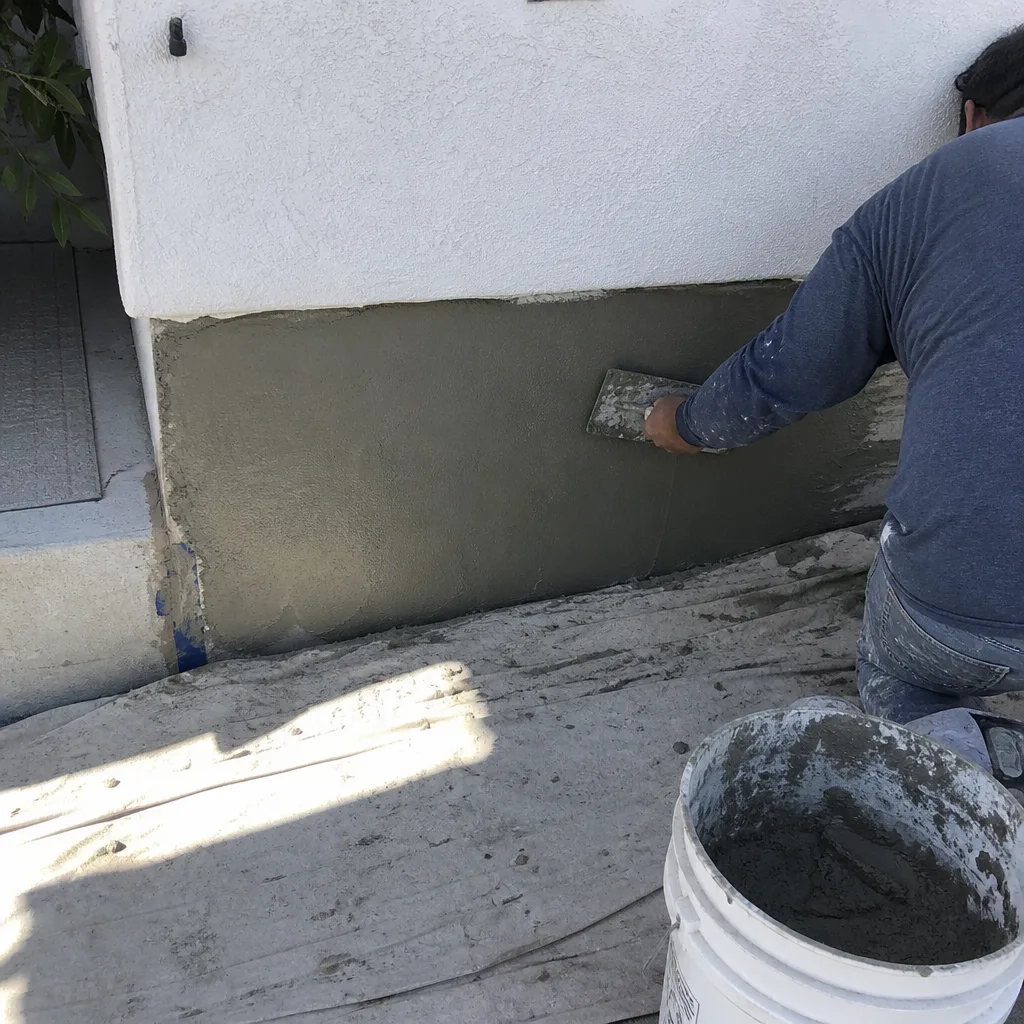 After
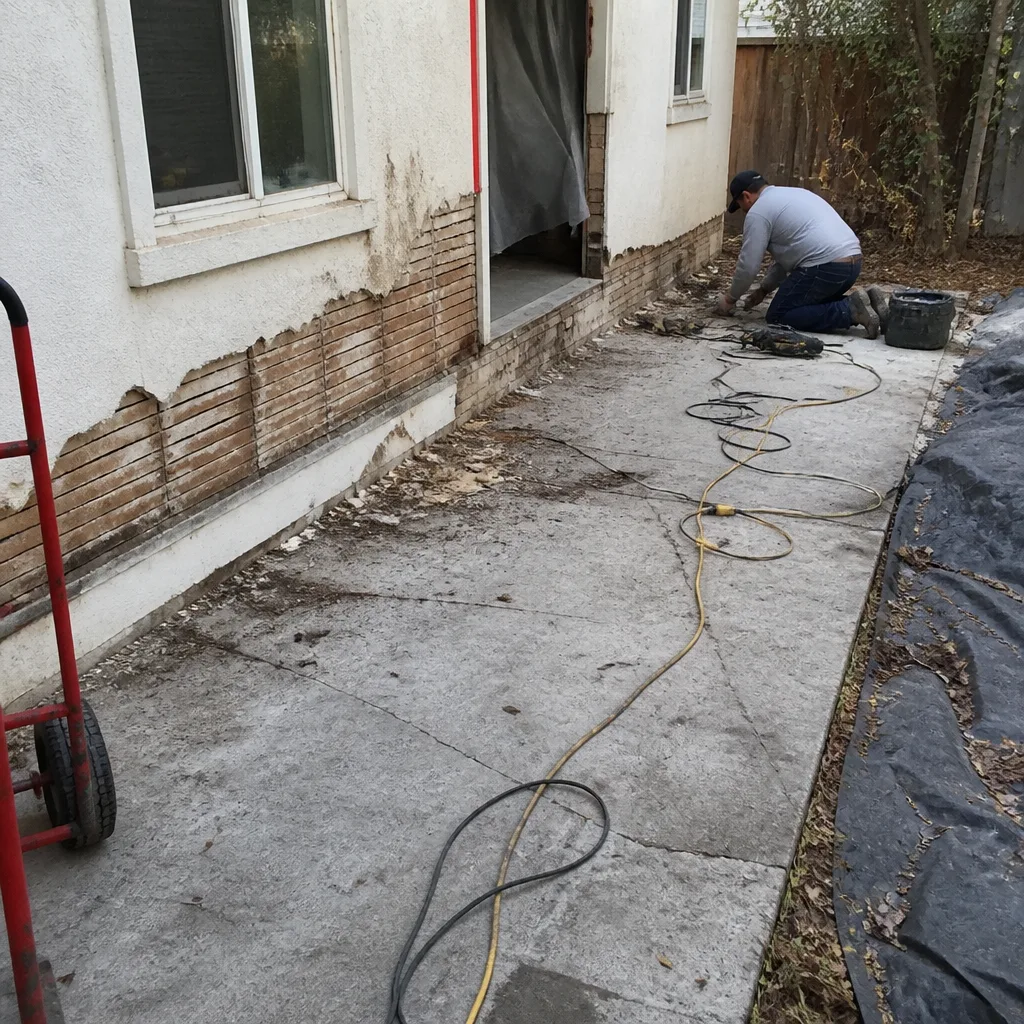 Before
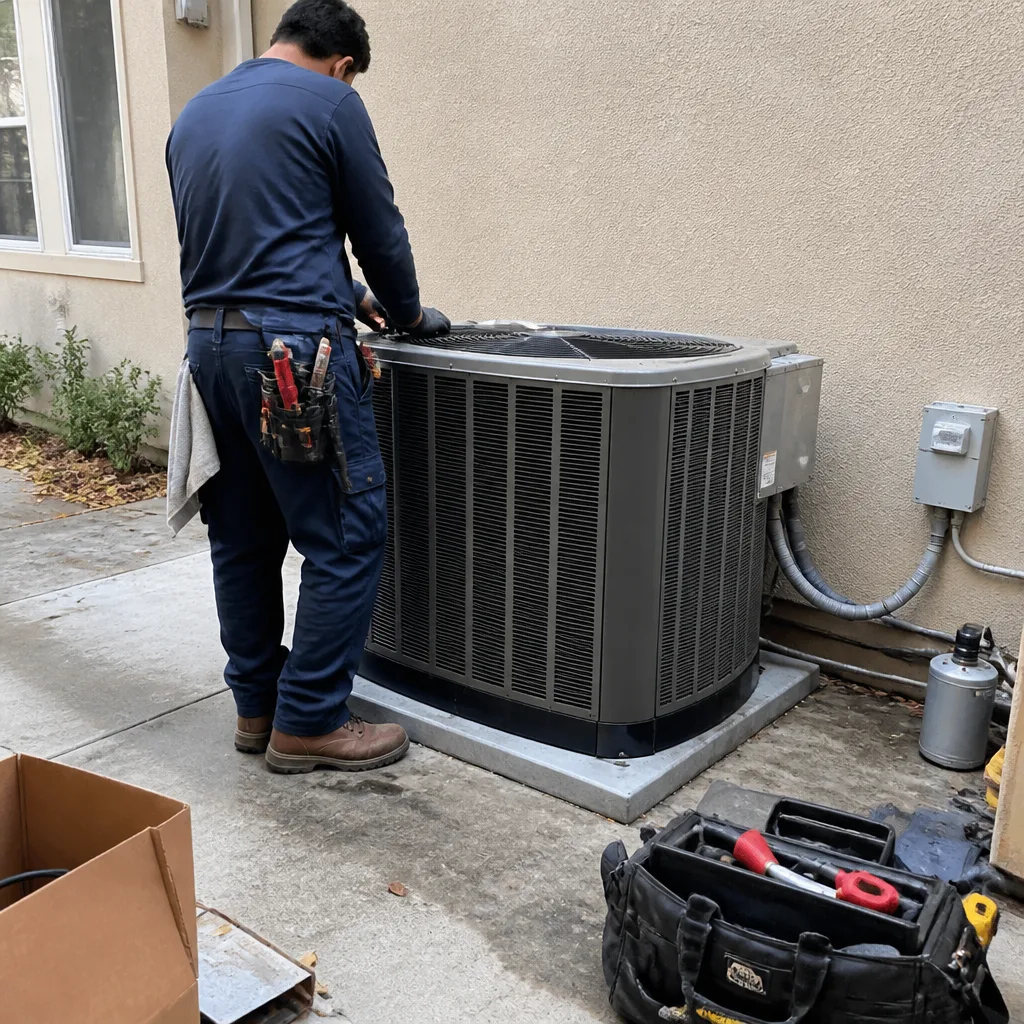 After
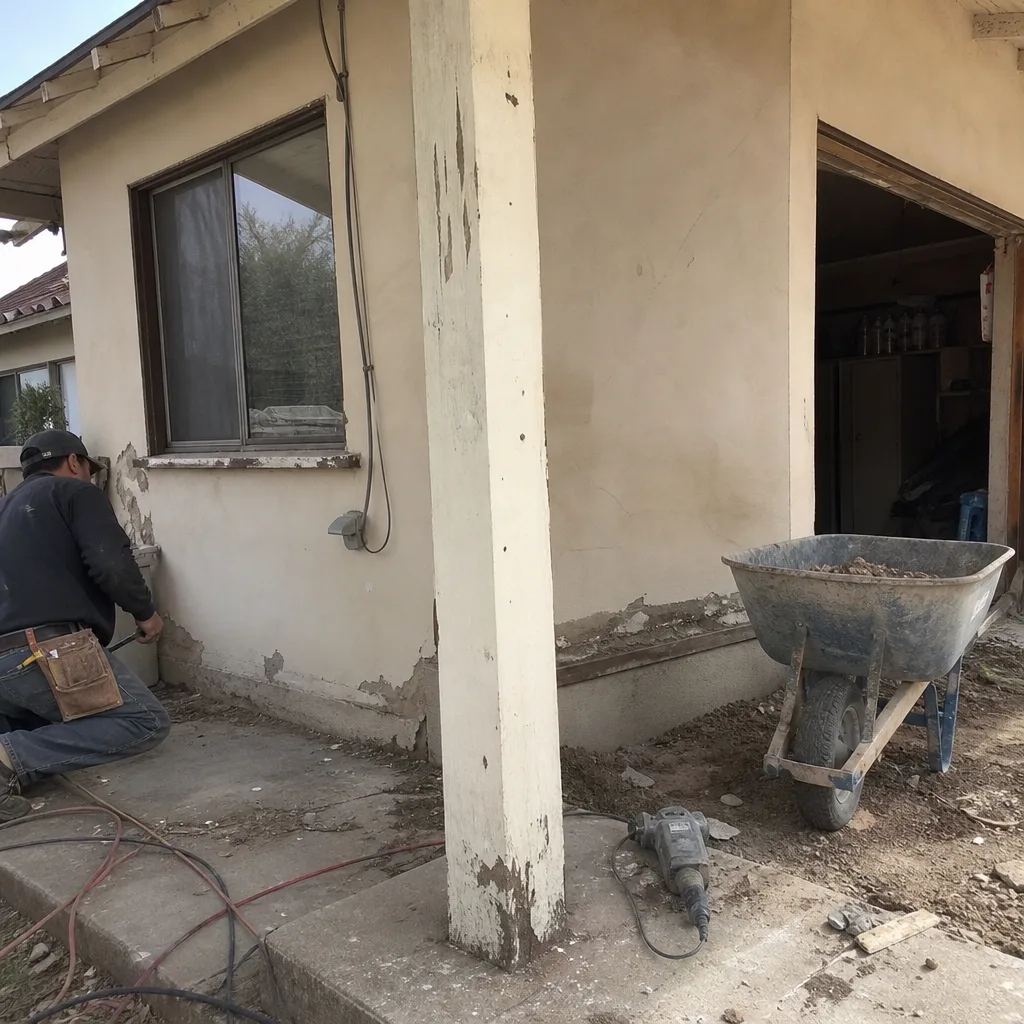 Before
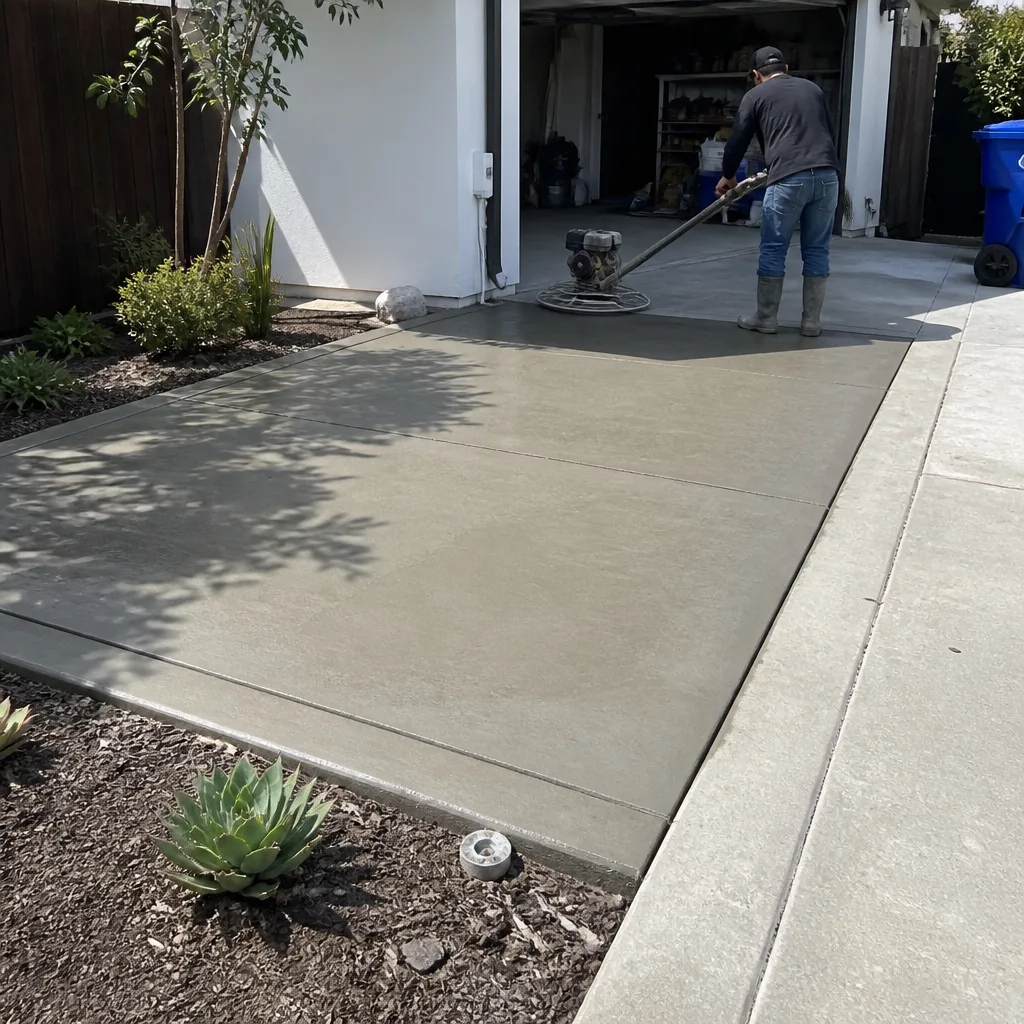 After
Replacement Cost & What’s Included
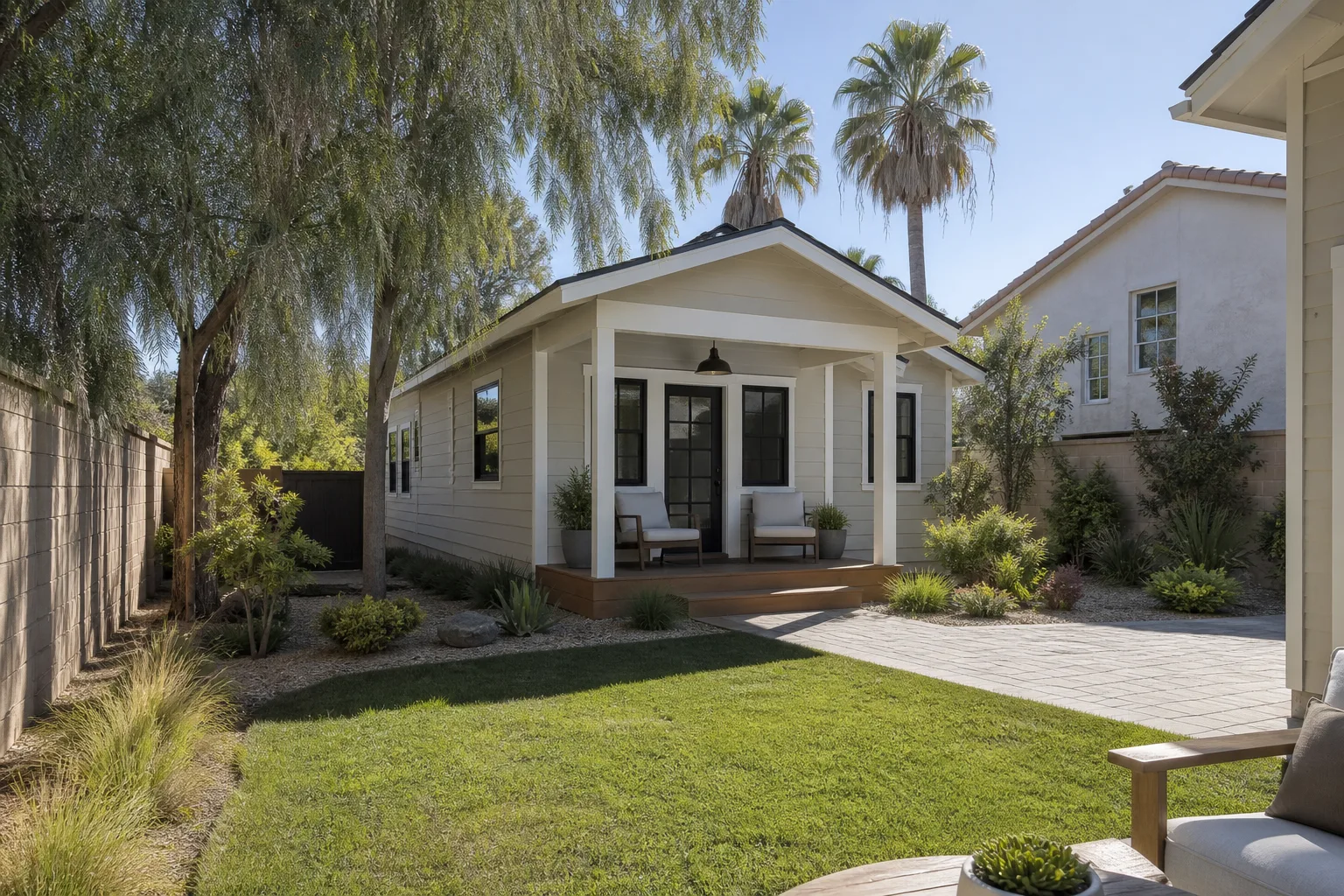
In Ventura, a full paver driveway replacement runs $7,000 to $18,000 depending on square footage, the paver you choose, and how much base needs rebuilding. Concrete driveway replacement lands at $5,000 to $14,000. Sealing runs $250 to $700 depending on the surface and condition. Spot repairs – replacing a sunken section or resetting a row of pavers – typically falls between $500 and $2,500.
What drives the price more than anything on paver work is the base. A proper install excavates 6 to 8 inches, compacts in lifts with a plate compactor, lays down crushed rock, then sand, then pavers, then polymeric sand in the joints. Skip any of those steps and you’re paying twice. We write the full scope in your quote: excavation depth, base material, paver brand and pattern, edge restraint, and the joint sand. You see the number before work starts, and that’s the number on the invoice. Our Done Right Promise covers the driveway work for a full year, in writing.
DIY or Call Us?
You can safely check a few things yourself: look for standing water after the next rain, walk every paver and mark the ones that rock, and photograph the widest cracks with a tape measure next to them for reference. That’s useful information and it costs you nothing.
What’s not a weekend project is rebuilding a compacted base. It requires excavating, hauling, and running a plate compactor correctly, which means understanding lift depths and moisture content. Get it wrong and you’ll have a finished-looking paver patio that undulates like a fairground funhouse mirror after one wet winter. Also be realistic about the labor: a 20-by-20-foot paver area involves roughly 10,000 pounds of material. That’s a truckload, not a trunk load. If you want it done once and done right, call (831) 604-3426. We’ve got the equipment, the crew, and a tape measure that’s been on more than a few driveway jobs.
FAQs
A properly installed paver driveway lasts 25 to 40 years in Ventura’s climate, outlasting concrete and asphalt by a wide margin because pavers flex instead of crack. The key is the base: a compacted, well-drained base means decades of stable pavers. The pavers themselves rarely wear out from traffic; they fail from bad installation underneath. Call (831) 604-3426 and we’ll assess what you’ve got before you spend a dime.
Yes, usually. We pull the affected pavers, rebuild the base underneath, and re-set the same stones if they’re intact. This costs far less than a full replacement and makes sense when the rest of the driveway is still level. If the whole driveway has settled in multiple spots, spot repair turns into a whack-a-mole game, and replacement becomes the honest recommendation. We’ll tell you which one you actually need.
Sealing is usually a one-day job. A sunken section repair takes one to two days depending on access and drainage corrections. Full driveway replacement typically runs three to five days for excavation, base, laying, and joint sand. We set a live arrival time and send photo updates before and after – you’ll know exactly what’s happening while it’s happening.
We handle all material sourcing directly with yard suppliers serving Ventura. We don’t keep a warehouse of pavers, but we order exactly what your job needs from local yards where the color lots are fresh and matchable. That also means we can pull replacement stones for repairs without making you chase down a distributor. Call (831) 604-3426 for a free estimate and we’ll walk the site with you, written quote in hand.
Written by Sawyer Remodel Ventura, Sawyer Remodel Ventura at Sawyer Remodel Ventura, serving Ventura and nearby areas. The work says it. We just show up and cut straight.