Last updated October 16, 2026








Free written scope consultation - allowances, timeline, and change-order rules on paper before a single trade is scheduled
Construction Warning Signs: A Ventura Homeowner’s Reference Guide
The most expensive contractor mistake Ventura homeowners make isn’t hiring a bad contractor. It’s hiring one with a warning sign they didn’t recognize as a warning sign. The bid that came in 30% lower than everyone else isn’t aggressive pricing; it’s a math problem that will become your problem. This guide breaks down the specific visual, contractual, and behavioral red flags we’ve learned to spot over nearly two decades of remodeling work in Ventura, so you can catch problems at the quote stage instead of the invoice stage. For how to hire a construction contractor in Ventura: a step-by-step guide, see our detailed walkthrough.
Quick Answer
The biggest contractor red flags in Ventura fall into three buckets: vague written scope that leaves material and permit costs open-ended, payment schedules tied to calendar dates instead of completed work, and communication patterns that show the contractor can’t or won’t document progress. A legitimate Ventura contractor will put a line-item price in writing before work starts, name the person running your job, and pull permits on work that requires them. For a deeper look at this decision, read our DIY vs Professional Construction: The Ventura Homeowner’s Decision Guide. If a bid is dramatically lower than the others and nobody can explain exactly why, that’s not a deal, it’s a deferred invoice.
Styles & brands we work with
- Kitchen remodeling
- Bathroom remodeling
- Home additions & ADU
- Roofing
- Windows & doors
- Driveway & pavers
- Fence
Table of Contents
- Bid-Stage Red Flags: What a Quote Should Never Look Like
- On-Site Behavioral Red Flags During the Project
- Communication Red Flags That Predict a Ghosting Contractor
- Contract Red Flags That Expose You to Future Liability
- How to Read Ventura Contractor Reviews Like a Pro
- Permit and Code Warning Signs Specific to Ventura
- Material Substitution: The Quiet Red Flag That Costs Thousands
- Common Mistakes to Avoid
- When to Call a Professional
Bid-Stage Red Flags: What a Quote Should Never Look Like
A quote is a promise written down. When it’s vague, it’s not a promise; it’s a placeholder. And placeholders get filled in later with your money. In Ventura, where stucco exteriors and aging plumbing are common, the quote stage is where most problems either get caught or get buried.
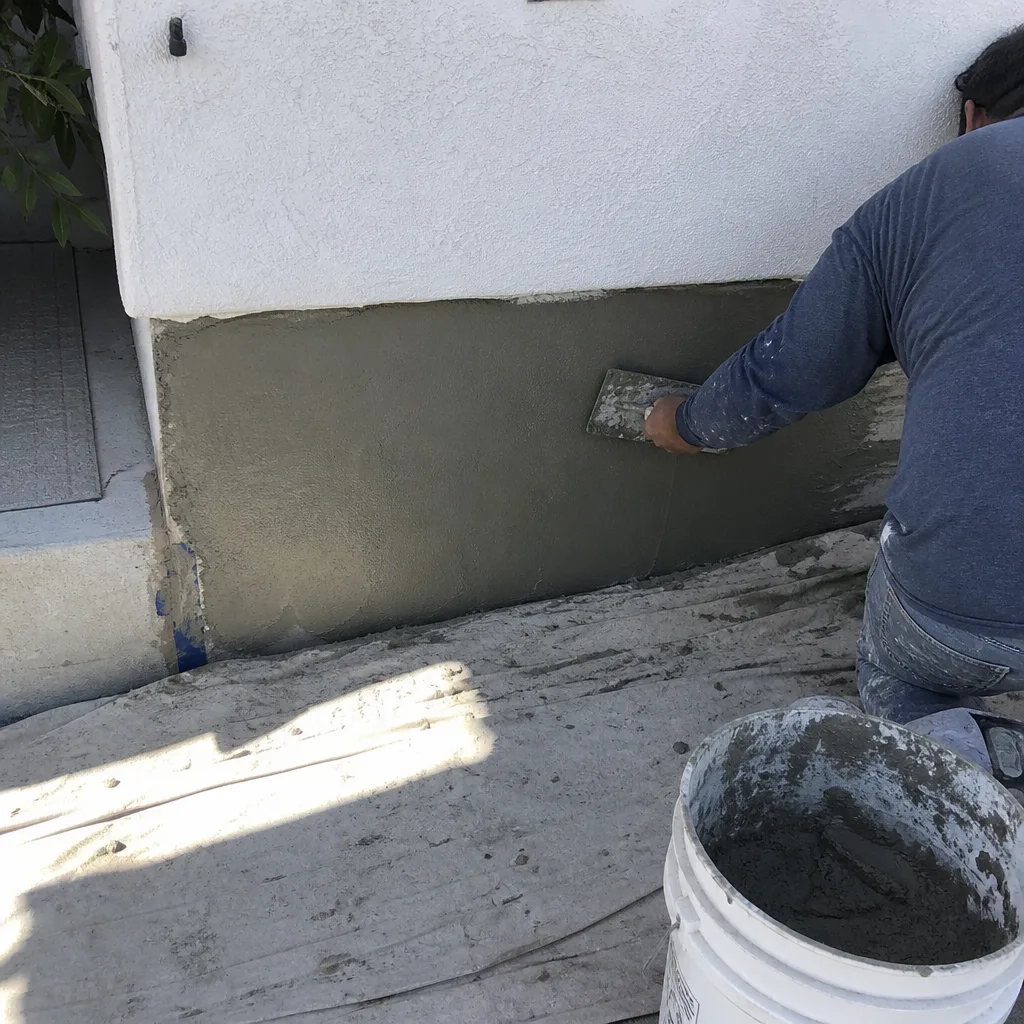
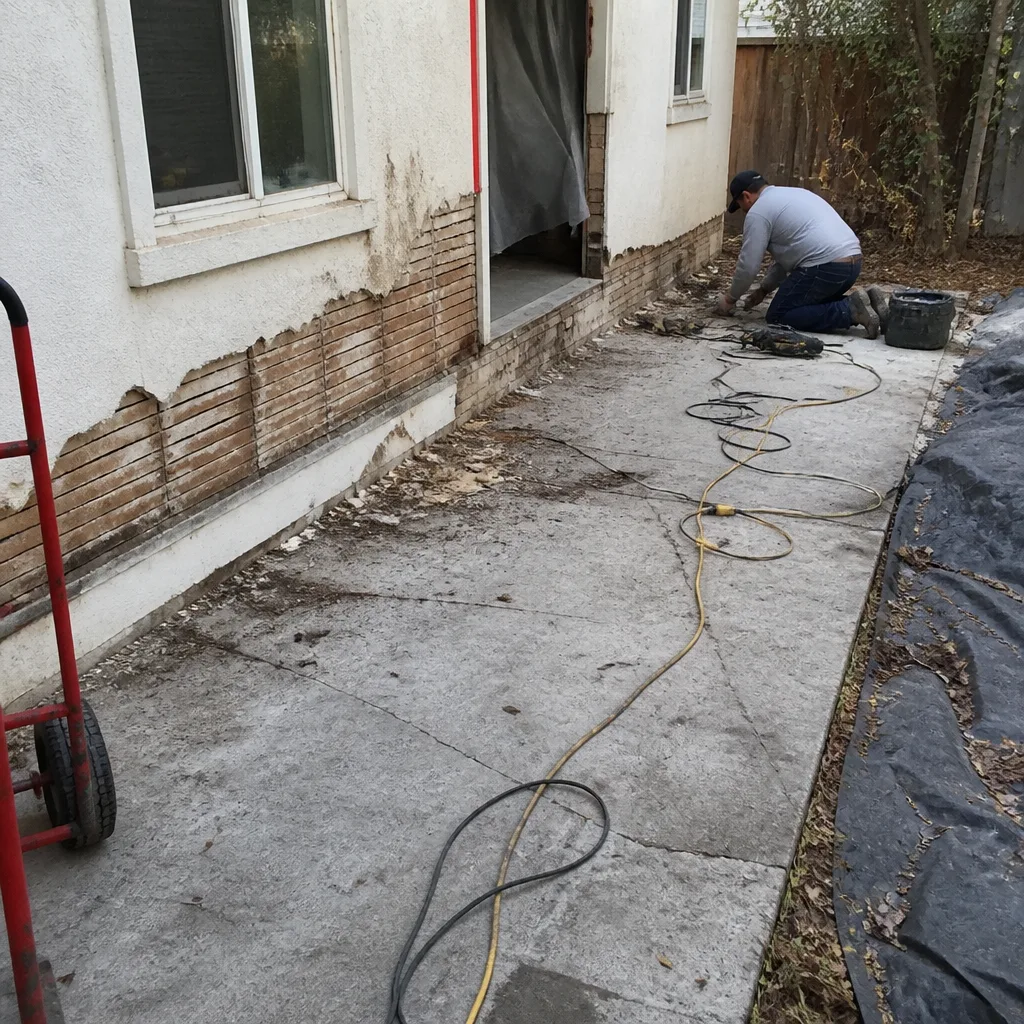
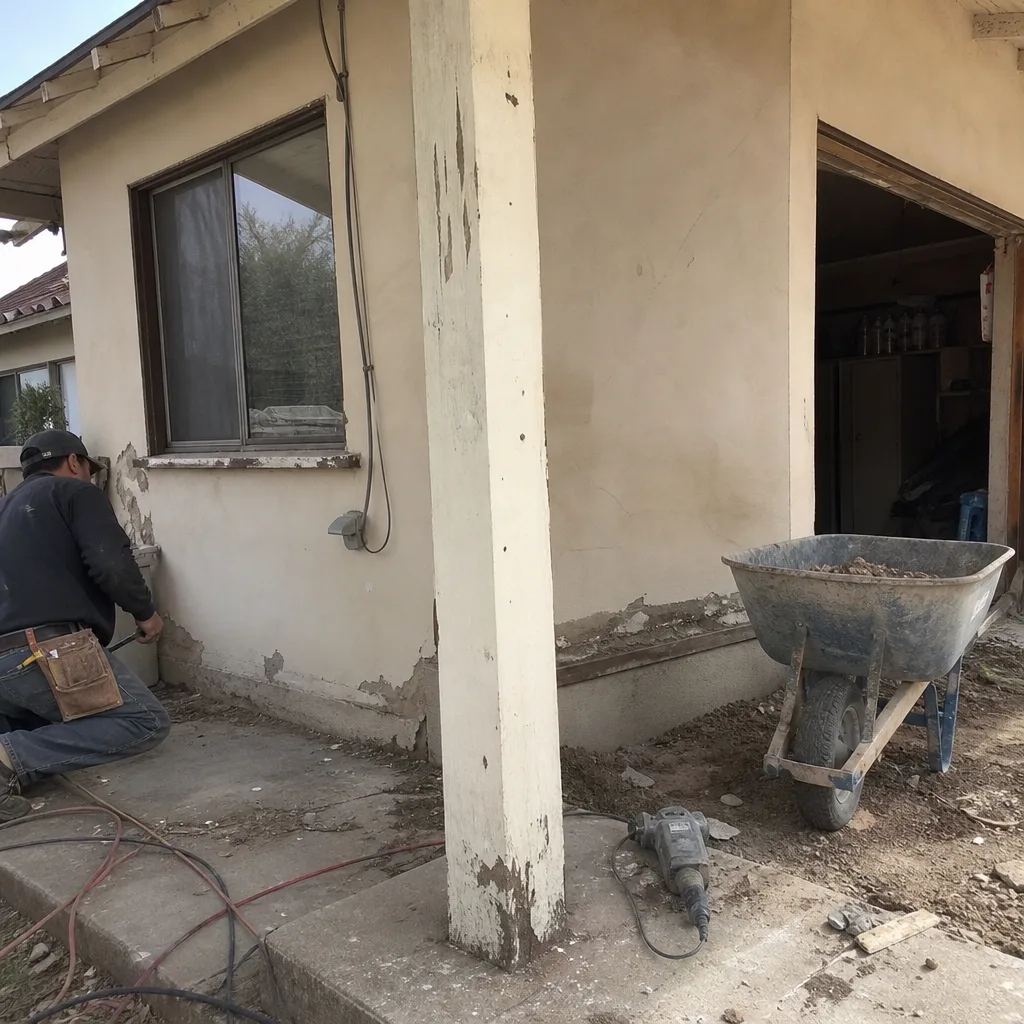
The first red flag is vague scope language on stucco repairs. Stucco work in Ventura’s coastal climate involves specific prep: crack routing, mesh embedding, and elastomeric patching that can handle salt air and seasonal temperature swings. A quote that says “repair stucco as needed” doesn’t tell you the square footage, the number of coats, or whether the patch will match the existing texture. A legitimate quote lists the repair area in square feet, names the patching material, and includes a note on texture matching.
The second red flag is a missing line item for permit fees. Ventura requires permits for structural work, electrical upgrades, plumbing relocations, and most exterior modifications. A contractor who quotes a bathroom remodel or home renovation in Ventura without a permit fee line is either planning to work unpermitted or planning to surprise you with the fee later. Neither is acceptable. Permit fees in Ventura are knowable before the quote is written, and they belong on it.
The third red flag is labor-only pricing that omits material cost escalation protection. Some contractors quote labor at a fixed number but leave material costs open, with vague language like “materials billed at cost.” That sounds fair until the cabinet order from a manufacturer like KraftMaid takes eight weeks and prices move. A quote that doesn’t specify material prices, brands, and quantities, locked for a defined window, is a quote with a built-in price increase. What we do at Sawyer Remodel Ventura is simple: a written price before any work starts, with the material line items matched to named brands like Cambria for countertops or Kohler for fixtures, so the number you approve is the number you pay.
Ask any contractor bidding your job one question: “What line in this quote covers the Ventura permit fees?” If they hesitate, swipe, or say they’ll “handle it later,” you’ve found your first warning sign.
On-Site Behavioral Red Flags During the Project
Once work begins, the quote-stage problems don’t disappear. They just put on work boots. The behaviors you see on-site each day will tell you more than any paper contract.
One of the clearest red flags is a subcontractor who can’t name the general contractor. On a bathroom remodeling project in Ventura, you’ll have tile setters, plumbers, electricians, and maybe a drywall crew. Every one of them should know who hired them and who is accountable for the job. If the tile guy shrugs when you ask who his GC is, you don’t have a general contractor. You have a project manager who subcontracted the whole thing and hopes nothing goes wrong.
Deliveries that don’t match the spec’d materials are another on-site signal. You approved Silestone countertops, but the truck dropped Caesarstone. Maybe it’s a mistake. Maybe it’s a substitution made to recover margin from a bid that was too low. Either way, the moment you see a material that doesn’t match your written spec, stop and ask. The same goes for windows, fixtures, tile, and lumber. A good contractor confirms deliveries against the spec sheet, not against whatever the supplier had in stock.
Work proceeding during an open inspection hold is the red flag that should end a project. When a Ventura building inspector issues a correction notice, work in that area must stop until the correction is signed off. Contractors who keep working through the hold are betting you won’t notice. But caught work means re-work, and re-work means cost overruns, and cost overruns mean the invoice is about to climb. If you see crew members working in an area the inspector flagged, take a photo and have a conversation that afternoon.
One more quiet signal: consistent security. Does the site get locked down at the end of the day, or are tools and materials left scattered? A scattered site isn’t just a mess. It’s a sign the crew is rushing, and rushing is where mistakes get made. In our experience, the crews that clean up and secure the site are the same crews that install straight lines.
Communication Red Flags That Predict a Ghosting Contractor
The contractor who disappears mid-project rarely starts out ignoring you. There were signs from the first week. They were just easy to miss because they looked like normal busy-contractor behavior.
The first sign is no documented schedule. Not a verbal “we’ll be there Tuesday.” A written schedule, even a simple one, that says which trades arrive on which days and what gets done that week. A contractor who won’t put a schedule in writing is protecting the freedom to not show up. At Sawyer Remodel Ventura, every project runs under The Relay Visibility Guarantee, which includes a live arrival time before anyone walks through your door. You know who is coming, when they’re arriving, and what they’re doing. No exceptions.
The second sign is no point-of-contact name. If every call you make is routed through a general number and you’re never given a name for the person running your job, that’s a structural gap, not a quirk. Someone should own your project. On our jobs, the uniformed technicians who show up are background-checked and named before they arrive. You always know who you’re dealing with.
The third sign is the callback commitment that never comes with a time. “We’ll call you back” is not a commitment. “We’ll call you back by 4:00 today” is. A contractor who can’t give you a callback time is a contractor who doesn’t manage their own day, which means they aren’t managing your project either. We answer calls with a live person 24/7 at (831) 604-3426. Not a voicemail loop. Not a callback queue. A person.
Here’s a quick test: after the first meeting, send a text or email with a simple question. Does the response come back the same day with a real answer? That’s a green flag. A two-day silence followed by an apology without an answer? That’s the ghost warming up.
Contract Red Flags That Expose You to Future Liability
A contract is not a formality. It’s the legal document that determines who pays when something goes wrong. And in construction, something always goes slightly wrong. The contract decides whether that’s a conversation or a lawsuit.
The single biggest contract red flag is missing lien waiver language. In California, subcontractors and suppliers who don’t get paid by your general contractor can file a mechanic’s lien against your house, even if you already paid the GC in full. A proper contract includes provisions for lien waivers at each payment milestone, signed by each sub and supplier before the next payment releases. A contract without lien waiver language is an open door to a lien on a Ventura home you already paid to renovate.
The second red flag is no written change order requirement. Change orders happen. You’ll change the tile. You’ll move an outlet. You’ll upgrade the vanity from the stock option to a Wellborn cabinet. But every change must be in writing, with a price attached, before the work happens. A contract that allows verbal change orders is a contract that allows the invoice to grow without your signature. Our position at Sawyer Remodel Ventura is written prices before work starts, and that applies to change orders too.
The third red flag is payment schedules tied to calendar dates rather than milestone completions. “Pay 50% on March 15” is a calendar payment. “Pay 50% upon rough-in inspection approval” is a milestone payment. Calendar payments mean you might pay for work that hasn’t happened yet. Milestone payments tie your money to demonstrated progress. If your contractor wants a deposit before work begins, keep it proportionate to the work being scheduled in the first phase, not half the job.
One more: check the warranty language. It should say what’s covered, for how long, and what happens if the fix fails. At Sawyer Remodel Ventura, we put our Done Right Promise in writing on every project: if it’s not done right, we make it right, for a full year after the project closes. And if a repair fails, the second visit is free. No argument, no fine print.
How to Read Ventura Contractor Reviews Like a Pro
Online reviews are a tool, but most homeowners use the wrong end of the tool. A five-star average tells you almost nothing by itself. The pattern behind the stars tells you everything.
A legitimate five-star profile for a Ventura contractor has variation. Some reviews mention a delayed permit. Some mention a sub who was rude. Some mention a four-star experience that got fixed. The reviews reference the city, the neighborhoods, the specifics. They say things like “the stucco patch on our Midtown house matched perfectly” or “they worked around our schedule on the east end.” Legitimate reviews are messy because real projects are messy.
A suspiciously uniform profile is the opposite. The reviews are all five stars, all similar length, all vague. “Great company, very professional.” No project specifics. No timeline. No neighborhood. These are either filtered, solicited under pressure, or purchased. The same warning applies to review clusters: a contractor with zero reviews for two years and then twenty reviews in one week has either discovered a sudden popularity or bought a package.
Look for the review that mentions a problem. Not one-star rage, but a three or four-star review that says something went wrong and was handled. That’s the most valuable review on the page because it tells you how the contractor behaves under pressure. A contractor who responds to criticism calmly, with specifics, is a contractor who will handle your project’s inevitable hiccups calmly too. A contractor who argues with unhappy reviewers is showing you how they handle disagreement.
In Ventura, also check whether the reviews mention the things that matter in this market: coastal moisture, stucco, permits, and the specific trade the contractor claims to specialize in. A general contractor with a hundred rave reviews about bathroom remodels and zero about general contractor work in Ventura exteriors may be padding a new service line with old credibility.
Permit and Code Warning Signs Specific to Ventura
Ventura has its own building codes, coastal overlay requirements, and seismic considerations, and a contractor who treats permits as optional is treating your home as their practice space.
The first sign is simple: your contractor tells you a permit “isn’t really necessary” for work that plainly requires one. Electrical panel changes, water heater relocations, bathroom plumbing moves, structural wall removal, and exterior stucco replacement all require permits in Ventura. A contractor who waves this off is either wrong or hoping to avoid the cost and delay of inspections, both of which are your problem when you try to sell the house later and the unpermitted work shows up in the disclosure.
The second sign is a permit pulled in the contractor’s name but not posted on-site. In Ventura, the permit card should be visible at the job site. If the contractor says the permit is “in the truck” or “on the way,” check with the city. It takes one phone call to Ventura’s building department to verify a permit is active, and that call is the smartest five minutes you’ll spend on the entire project.
The third sign is work that crosses the line from remodel into renovation without a plan update. If you start with a bathroom refresh and the scope expands to moving walls or adding square footage, the original permit may no longer cover the work. A good contractor flags this immediately and updates the permit. A bad one keeps framing and hopes the inspector doesn’t look past the original scope.
We pull permits and pass inspections as standard practice at Sawyer Remodel Ventura home. It’s not an upgrade; it’s the baseline for doing work you can sell, insure, and live in without a nagging worry.
Material Substitution: The Quiet Red Flag That Costs Thousands
Material substitution is the most common way a low bid becomes a high final invoice. It rarely happens in an obvious way. It happens one fixture at a time, one box at a time, one “supplier issue” at a time.
The pattern looks like this: your contract specifies a Kohler faucet, a Cambria countertop, a James Hardie siding product. Then the supplier is “backordered,” and the contractor offers a “comparable” product at the “same price.” The comparable product is not the same price. It’s cheaper, and the difference is the contractor’s hidden margin.
Here’s how to protect yourself without being difficult:
- Get every material named in the contract by brand and model number, not by category. “Kohler Purist widespread faucet” not “chrome faucet.”
- Before the project starts, ask for the supplier list for major materials: cabinets, countertops, tile, fixtures, windows.
- When a substitution is proposed, ask for the price difference in writing. A legitimate contractor passes savings on or explains why the switch costs the same.
- Take photos of deliveries. If a box arrives that doesn’t match the spec, call it out the same day, in writing.
At Sawyer Remodel Ventura, we build our quotes around named brands from the start: KraftMaid and Wellborn for cabinetry, Cambria and Silestone for countertops, Kohler and Moen for fixtures, GAF and James Hardie for exteriors. That way, the substitution conversation never has to happen, because the supplier chain is already built on products with manufacturer backing and known pricing.
The quiet red flag to watch is a contractor who gets vague when you ask about material brands. “Don’t worry about the brand” is a sentence that should make you worry about the brand.
Common Mistakes to Avoid
- Accepting the lowest bid without asking why it’s low. A Ventura contractor bidding 30% under the field isn’t more efficient; they’re omitting something, and that something will be billed later. Ask every low bidder one question: “What exactly is included that the others are charging for?” The silence tells you everything.
- Signing a contract with a calendar-based payment schedule. Paying by date instead of milestone means you’ll be paying for work that hasn’t been done. Tie every payment to a completed, inspected phase.
- Skipping permit verification. In Ventura, unpermitted work becomes a disclosure problem at resale. One call to the city confirms whether your contractor pulled the permit they said they pulled.
- Trusting online reviews without reading the pattern. Clusters of vague five-star reviews are less credible than a single three-star review that describes how a problem was handled. Read reviews like a detective, not a consumer.
- Not getting the point-of-contact’s name and direct number. If your only contact is a general office line, you don’t have a point of contact. You have a phone tree. Get a name, a cell number, and a confirmed response time.
- Approving verbal change orders. “Can we just move that outlet while you’re here?” is a verbal change order that will appear on the invoice. Get every change in writing with a price before the work happens.
- Ignoring the material spec sheet after signing. The contract is not the final word if you don’t check what actually arrives. Substitution is legal when the contract allows “comparable” materials, so cross out “comparable” and write in exact brands and model numbers.
When to Call a Professional
Some warning signs are obvious immediately: a bid with no permit line, a payment schedule that demands half up front, a contractor who can’t name his subs. These are reasons to walk away. But other signs are quieter, and they require experience to interpret. If you’re looking at a bid that seems too low and you can’t identify exactly why, that’s a time to get a second opinion. If a contractor asks you to sign anything you don’t fully understand, that’s a time to get a second opinion. If work has already started and you’re seeing material substitutions or skipped inspections, that’s a time to pause the job and call someone who can assess the damage before it compounds. Sawyer Remodel Ventura offers free estimates in Ventura, call (831) 604-3426 and we’ll look at what you’ve been quoted and tell you what’s real, what’s missing, and what it should cost. You can also browse more guides & resources on hiring and managing contractors.
See the difference
 Before
 After
 Before
 After
 Before
 After
Frequently Asked Questions

A legitimate low bid comes with an explanation you can verify: the contractor is running fewer overhead costs, sourcing materials through a distributor relationship, or scheduling your project in a slow season. A suspicious low bid comes with vagueness about permit fees, vague material categories, and no line items you can compare against other quotes. In Ventura, where labor rates and permit requirements are consistent across contractors, a 30% gap almost always means omission, not efficiency. If the bidder can’t tell you exactly where the savings come from, call (831) 604-3426 for a free evaluation of the quote.
A California remodeling contract should include a detailed scope of work with material brands and model numbers, a line item for permit fees, a milestone-based payment schedule tied to completed and inspected phases, lien waiver provisions for subcontractors and suppliers, written change order requirements, and a warranty clause in plain language. Missing any of these creates exposure. We put our Done Right Promise in writing on every project so the warranty language is never buried in legal jargon.
Call the Ventura Building and Safety Division and ask for the permit status at your address. The city will verify whether a permit is active, what scope it covers, and whether any inspections are pending. The permit card should also be posted at the job site. If your contractor says the permit is “in process” for more than a few days, verify directly with the city before any work continues.
The biggest red flag during a project is work continuing through an open inspection hold. It means the contractor is prioritizing their schedule over code compliance, and any covered work that fails a later inspection will have to be torn out and redone at your cost. It’s the difference between a contractor who builds to the standard and one who builds to the deadline.
Permits add time and cost, and some contractors skip them to keep a bid competitive in Ventura’s busy remodeling market. But unpermitted work creates real problems: it may not meet current code, it won’t be covered by certain insurance claims, and it becomes a disclosure item when you sell. A contractor who skips permits is transferring their shortcut onto your property record.
Stop and document it. Take a photo of the delivered material, check it against your contract’s spec sheet, and send a written note to your contractor asking for an explanation and a price adjustment if applicable. Do this before the material gets installed. Once it’s installed behind tile or under stucco, the leverage shifts. Material substitution documented before installation is a negotiation; after installation, it’s a dispute.
The Bottom Line
Contractor warning signs in Ventura are not hidden knowledge. They are visible at the quote, on the contract, on the job site, and in the review history, but only if you know what to look for. The contractor who skips permit line items, avoids material specs, and pays by calendar instead of milestone is not making innocent mistakes. They are structuring the project so the risk stays on your side of the table. The fix is simple: demand written prices, named materials, verified permits, and milestone payments before work starts. If a contractor won’t put it in writing, that’s the only warning sign you need. Sawyer Remodel Ventura can be reached at (831) 604-3426 for a free estimate on any Ventura remodeling project.
Written by the team at Sawyer Remodel Ventura.