Last updated October 16, 2026







Free written scope consultation - allowances, timeline, and change-order rules on paper before a single trade is scheduled
Seasonal Construction Care for Ventura: Year-Round Homeowner’s Guide
The reason Ventura homeowners are often blindsided by exterior failures isn’t that they skipped maintenance. It’s that they did maintenance in the wrong month. Sealing stucco in December, for example, traps moisture that was already wicked in during the marine layer season and turns a surface fix into a substrate problem. Ventura doesn’t have four dramatic seasons, but it does have four distinct threat windows: marine layer and moisture in early summer, fire and wind in fall, rain and drainage stress in winter, and UV and thermal cycling in spring. Each one targets different parts of your home. This guide assigns maintenance and remodel planning to the right window so the work actually holds up, and you can find more guides & resources in our blog.
Quick Answer
Seasonal home maintenance in Ventura means working with four weather windows, not the traditional four seasons. Marine layer moisture from May through July attacks wood, stucco, and crawl spaces. Santa Ana winds from September through November demand fire hardening and weatherproofing before the dry gusts arrive. Winter rain stresses Ventura’s clay-heavy soil, foundations, and drainage. And the spring window from March through May is the best time for exterior remodeling because temperatures and humidity cooperate with paints, stucco, and roofing materials. Schedule your inspections and repairs in the right window and you’ll avoid most of the costly failures we see in Ventura.
Styles & brands we work with
- Kitchen remodeling
- Bathroom remodeling
- Home additions & ADU
- Roofing
- Windows & doors
- Driveway & pavers
- Fence
Table of Contents
- The Marine Layer Window (May – July): What June Gloom Does to Your Home
- The Santa Ana Window (September – October): Fire Hardening and Dry Wind Prep
- The Winter Rain Window (November – February): Soil, Foundation, and Drainage
- The Spring Construction Window (March – May): Why It’s the Best Time for Exterior Remodeling
- Year-Round Coastal UV: What Actually Holds Up in Ventura’s Sun and Salt
- Common Mistakes to Avoid
- When to Call a Professional
- Frequently Asked Questions
The Marine Layer Window (May – July): What June Gloom Does to Your Home
Ventura’s marine layer is a low cloud deck that rolls in from the Pacific and sits over the city for days at a time, usually from May through July. It brings persistent humidity, cool temperatures, and moisture that settles on exterior surfaces and never fully dries. The humidity often stays above 70% for weeks. That’s a bigger threat than most homeowners realize.
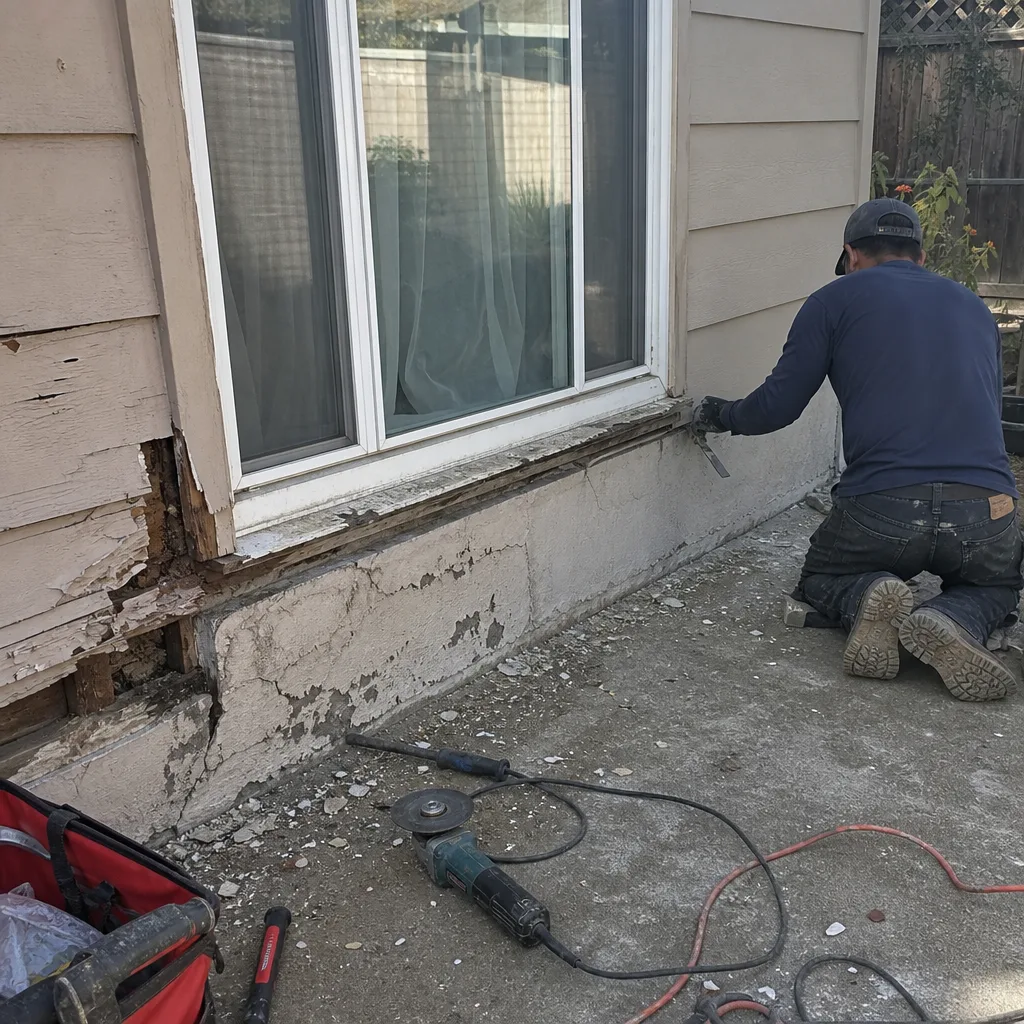
Wood siding, window trim, and fascia boards absorb that moisture slowly. If the paint film has hairline cracks, water wicks into the wood grain and sits there. By August, the heat returns and the trapped moisture expands, which is why we see so much peeling paint and warped trim in late summer across Ventura neighborhoods like Midtown and College Area. The damage happened in June, but the symptom showed up in August.
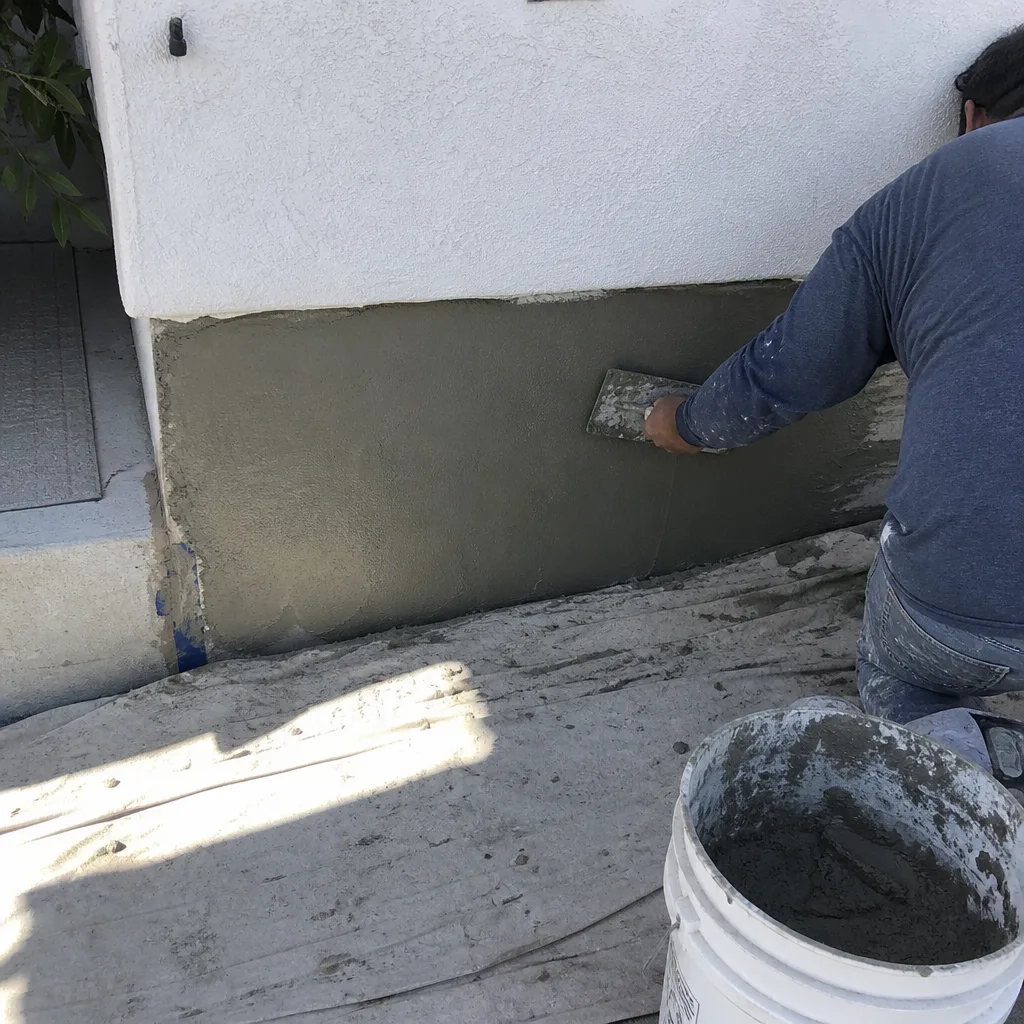
Stucco is especially vulnerable during the marine layer window. Stucco is porous. It pulls moisture from the damp air, and when the sun breaks through, that moisture drives deeper into the wall cavity. If you seal or paint stucco during this window, you trap the moisture inside. The fix fails, sometimes within a year. We’ve seen exterior paint jobs fail in under twelve months because they were applied in June over stucco that hadn’t had time to dry properly.
Unventilated crawl spaces take the worst hit. The ground under a Ventura home is naturally damp. Add weeks of high humidity and the air in a closed crawl space condenses on floor joists, subflooring, and ductwork. That’s how you get mold, rot, and musty smells that drift up through the floorboards. Homes in the Juanamaria and Saticoy areas with older pier-and-beam foundations are particularly prone to this.
Before marine layer season starts, do this:
- Inspect all exterior caulk joints around windows and doors in April. Replace any cracked or shrunken sealant before the humidity arrives.
- Check your crawl space vents. If you have foundation vents, make sure they’re open and unobstructed.
- Look at the paint film on south- and west-facing walls. Even small cracks will wick moisture during June Gloom.
- Walk your fence line. Wood fences absorb marine moisture and the bottoms rot first. Check post bases for soft spots.
- If you’re planning exterior paint or stucco work, schedule it for September or later, not June.
If you see evidence of moisture in your crawl space during the marine layer season, don’t ignore it. Ventilation and moisture barriers are affordable fixes. Subfloor replacement and mold remediation are not.
The Santa Ana Window (September – October): Fire Hardening and Dry Wind Prep
Santa Ana winds are a Ventura reality every fall. Hot, dry air blows down from the interior, humidity drops into the single digits, and sustained winds of 30 to 50 miles per hour with higher gusts are common. For homeowners in the hillside neighborhoods north of Foothill Road and along the east end of town near Clearpoint, the wind isn’t just a minor annoyance. It’s a fire hazard and a structural stress test.
The fire-hardening window is September through October. The goal is to reduce the ways wind-driven embers can get into or against your home. Embers don’t usually land on your roof and stay there. They get blown into gaps, under eaves, into vents, and against dry landscape mulch.
Here’s the step-by-step we recommend for Ventura homeowners, particularly in the hillside interface zones:
- Inspect your roof eaves and fascia in September. Any gap wider than 1/8 inch is an ember entry point. Caulk and seal them.
- Upgrade attic and crawl space vents to 1/8-inch metal mesh. Skip the plastic mesh, which melts under ember contact.
- Walk your roofline. Remove accumulated pine needles, leaves, and debris from the roof surface and valleys.
- Clean gutters. Dry gutters full of leaf litter are an ember ignition source. This is a different problem than winter gutter clogs, which cause water backing. In fall, the fire risk is the point.
- Move firewood, propane tanks, and anything combustible away from the outside walls. A 5-foot clearance is the practical minimum.
- Trim branches that overhang the roof or come within 10 feet of the chimney. Clear out dry brush under decks and against the house.
Santa Ana winds also find weak points in siding, flashing, and fencing. Loose shingles, warped siding, and old fence posts don’t fail on calm days. They fail when 50-mile-per-hour gusts hit them. Remove or repair anything loose before October. A loose fascia board is a cheap fix in September and an expensive one in November when it tears off and takes roofline flashing with it.
One more thing: the fall window is when we get an influx of repair calls for wind-damaged roofs and fencing. By mid-October, the best contractors in Ventura are booked out because the wind season started. Get your inspection and quotes done in September.
The Winter Rain Window (November – February): Soil, Foundation, and Drainage
Ventura’s winter is defined by rain, not cold. Average winter lows rarely dip below 45 degrees, but the rainfall that comes between November and February lands on soil that has a specific problem: it’s clay-heavy. Clay swells when it’s wet and shrinks when it’s dry. After a wet winter, the soil around your foundation is doing the equivalent of inhaling and holding its breath. That movement is what cracks foundations, walkways, and driveways.
Foundation inspection in Ventura should happen after the first significant rain of the season. You’re not looking for catastrophic failure. You’re looking for changes. Hairline cracks in interior drywall near door corners, doors that suddenly stick or fail to latch, and new gaps between baseboards and the floor are all signs of movement. Most of these are normal for clay soil. The question is whether the grading around your home is pushing water toward the foundation instead of away from it.
Here’s what to check after the first big storm:
- Walk the perimeter of your house. Water should slope away from the foundation for at least six feet. If puddles form next to the wall, you have a grading problem.
- Check downspouts. Every downspout should discharge at least four feet from the foundation. Extensions are cheap. Foundation repair is not.
- Look at flatwork crack patterns. Cracks in driveways and walkways that widen after rain are evidence of soil movement underneath.
- Inspect retaining walls on hillside properties. Hydrostatic pressure behind the wall is at its highest after wet weeks.
- Under the house, if you have a crawl space, look for standing water or saturated soil. A wet crawl space in winter is a mold factory by spring.
Ventura’s older neighborhoods, especially the ones on the east side near Citrus Glen and Montalvo, have grading that was done decades ago and has settled. We see a lot of foundation and drainage work requested in January and February once homeowners notice the cracks. The good news is that regrading, downspout extensions, and French drains solve most drainage-driven movement before it becomes structural.
There’s a second winter issue: gutters. Ventura doesn’t get snow, but it gets hard rain. A clogged gutter during a downpour overflows and sends water down the wall and into the window trim. By the time you see interior water stains, the leak has been active for a while. Clean gutters in late October and again in January if we have a heavy leaf-drop year.
The Spring Construction Window (March – May): Why It’s the Best Time for Exterior Remodeling
If you’re planning exterior paint, stucco repair, roofing, or siding in Ventura, schedule the work for March through May, as we explain in The Complete Guide to Construction in Ventura. This isn’t about contractor marketing. It’s about material chemistry. Paint cures best when temperatures stay between 50 and 85 degrees and humidity sits in the lower range. Stucco requires specific moisture conditions to cure properly, and applying it during marine layer season or right before rain guarantees subpar results. Roofing adhesives, sealants, and asphalt shingles all bond more reliably in the mild, dry spring conditions we get after the winter rain clears and before June Gloom arrives.
Spring also gives you a clean moisture baseline. The winter rain has dried, the marine layer hasn’t started, and the wood, stucco, and substrate have reached equilibrium. That’s the condition that lets coatings and sealants do what the manufacturer intended.
There’s a scheduling reality in Ventura too. Every spring, the permit backlog grows. Homeowners realize their exterior is failing, the weather is good, and suddenly the planning department is processing a wave of applications. If you want a spring construction window, start the permit process in February. Some Ventura exterior remodels require approval, especially for structural work, window replacements that change the opening size, or any exterior modification visible from the street in certain historic districts. A general contractor can tell you what’s required for your specific project and address. You can talk through your renovation scope with our team at Home Renovation in Ventura before you file anything.
For homeowners planning a larger exterior overhaul, spring is also the right season to coordinate multiple trades. Roofers, painters, stucco crews, and gutter installers can sequence their work without rain delays. If you’re redoing your siding, it’s worth looking at material options that hold up to Ventura conditions. James Hardie fiber cement siding, for example, is a common choice on coastal homes because it handles the moisture-UV cycle better than wood. We’ve installed it on homes throughout the Ventura hills and along the beach side where wood siding would need repainting every three to four years.
One last point on spring: it’s the season to fix what winter revealed. If you found cracks, water stains, or drainage issues during the winter window, spring is the time to get the permanent fix done before the marine layer and Santa Ana seasons return.
Year-Round Coastal UV: What Actually Holds Up in Ventura’s Sun and Salt
Ventura gets about 270 days of sunshine a year, and the air carries salt from the Pacific. It’s not just the sun. It’s the sun plus salt spray plus the marine layer’s humidity and the Santa Ana’s dryness, cycling building materials through stress conditions month after month. Some materials fade. Others chalk. And a few delaminate entirely.
Here’s what fails fastest in Ventura’s coastal UV environment:
- Film finishes on wood siding and trim. Traditional latex paints last three to five years on the coast, often less on the south and west walls. The combination of UV radiation and salt breaks down the binder in the film, causing chalkiness and fading.
- Vinyl siding. Vinyl expands and contracts with temperature swings, and the thermal cycling between marine-layer coolness and afternoon sun stresses the material. Dark vinyl colors also fade unevenly.
- Asphalt shingle roofs within a mile of the ocean. Salt air accelerates granule loss. We’ve seen 20-year shingles need replacement in 12 to 15 years on homes near Ventura Harbor.
- Untreated wood decking. The coastal cycle of damp air, sun, and salt eats through sealants quickly. Annual resealing is mandatory, not optional.
- Cheap caulk and sealant. Low-grade silicone caulk breaks down under UV in one to two years. That’s why we see so much window and door sealant failure around Ventura homes.
What holds up better:
- Fiber cement siding like James Hardie. It’s dimensionally stable in the moisture-UV cycle and doesn’t chalk like wood paint films. Installed properly, it lasts decades.
- High-grade acrylic exterior paints designed for coastal exposure. These cost more per gallon, but the binder chemistry resists salt and UV breakdown significantly longer than standard latex.
- Metal roofing or tile roofing. Heavier and more expensive upfront, but neither material degrades the way asphalt shingles do in salt air.
- Composite decking. It costs more than wood upfront and eliminates the annual resealing cycle that wood demands in Ventura’s climate.
- High-quality sealants like marine-grade polyurethane or advanced silicone blends rated for UV exposure. These last five to ten years, not one to two.
The lesson: in Ventura, material selection matters more than maintenance frequency. Choose materials rated for coastal UV and salt exposure and you spend less time and money on upkeep. We source fixtures and finishes from manufacturers like Kohler and Toto for interior work, and on exteriors we steer clients toward products with proven coastal durability. We also use Schluter edge trim systems (the metal strip that waterproofs where tile meets the floor) on bathroom and wet-area work because they hold up under conditions that cause other waterproofing methods to fail. Selecting the right product upfront is one of the biggest differences between a remodel that lasts and one that needs redoing in five years.
If you’re trying to decide whether your exterior is holding up as well as it should, the General Contractor in Ventura page outlines what a professional assessment involves and how our written-price approach works.
Common Mistakes to Avoid
- Sealing or painting exterior surfaces during June Gloom. Trapped moisture turns a cosmetic fix into a substrate failure. Wait until the marine layer passes.
- Ignoring the Santa Ana window. Homeowners in Ventura hillside neighborhoods skip September fire-hardening and pay for it when the winds arrive. Loose fascia and clogged gutters are avoidable failures.
- Assuming a wet winter means your drainage is fine because the water “went away.” Clay soil holds water long after the surface dries. Foundation movement symptoms show up months later.
- Applying cheap caulk to exterior joints. Low-grade sealants fail in one to two years under Ventura’s UV load. You’ll redo the work inside of three years.
- Painting over failing stucco. Stucco needs specific repair protocols before new paint. Paint over damaged stucco peels within a season.
- Scheduling exterior remodel work for the cheapest month. The cheapest month is usually the worst weather window. The spring window costs more in demand but the work lasts.
- Waiting to check the crawl space until you smell mold. By the time the smell reaches your living room, the damage is already done. Inspect during the marine layer window.
When to Call a Professional
Some seasonal maintenance is doable on a weekend. Caulking window joints, cleaning gutters, and checking downspout drainage are all within reach. But there are scenarios where a professional evaluation is the right call. Noticeable cracks in the foundation or new cracks appearing around doorways and windows after a rainy winter are worth having an experienced contractor look at. Roof leaks near the eaves or fascia that have pulled loose after Santa Ana winds need prompt attention before the next rain. Exterior paint that’s peeling in sheets rather than small spots usually means the underlying substrate has a moisture problem that repainting alone won’t fix. And any remodel that involves structural changes, stucco repair, or siding replacement is work you don’t want to learn on. Sawyer Remodel Ventura offers free estimates in Ventura, and we’re happy to look at what you’re seeing before you commit to anything. Call (831) 604-3426 to talk through what’s going on at your place.
Frequently Asked Questions
Most Ventura homeowners spend between $300 and $1,200 per year on seasonal maintenance when they handle inspections and minor fixes themselves. Professional inspections from a licensed contractor typically run $150 to $400, depending on the scope. Major seasonal repairs like exterior paint, stucco repair, or roof work range on the project size. Call (831) 604-3426 for an exact quote on your home, estimates are free and the price you get is the price you pay.
March through May is the ideal window for exterior painting in Ventura. Temperatures are moderate, humidity is low, and the marine layer hasn’t settled in yet. Paint applied in this window cures properly and bonds to the surface. Avoid painting during June Gloom or in the rainy winter months. Call (831) 604-3426 to schedule a spring painting estimate.
Many exterior remodeling projects in Ventura require a permit, including structural changes, siding replacement, window opening modifications, and some roofing work; check Construction Permits, Codes & Inspections in CA: What You Need to Know for specifics. The specific requirements depend on the scope and your home’s location. The Ventura permit backlog grows every spring, so starting the process in February gives you the best chance of a spring construction window. Call (831) 604-3426 and we can tell you what’s required for your specific project.
Inspect your crawl space twice a year in Ventura: once in June during the marine layer window and once in January after the first heavy winter rains. These are the two times when moisture problems become visible. If you see standing water, condensation on joists, or mold, call a professional before it spreads. Call (831) 604-3426 for a crawl space evaluation and recommendations.
Look for new hairline cracks in interior drywall near door corners, doors that stick or fail to latch, gaps between baseboards and the floor, and cracks in exterior stucco or brick that widen after rain. These symptoms in a Ventura home with clay-heavy soil often indicate drainage-driven foundation movement. Most are fixable with grading and drainage improvements, not major structural work. Call (831) 604-3426 for an assessment.
Bathroom remodeling is less weather-dependent than exterior work, but the best time to schedule in Ventura is late summer or early fall, after the exterior construction rush and before the holiday season. It gives you a completed bathroom before the end of the year. We handle bathroom remodels year-round and can help you plan the timeline at Bathroom Remodeling in Ventura. Call (831) 604-3426 to talk through your project.
The Bottom Line

Ventura’s four threat windows marine layer, Santa Ana winds, winter rain, and year-round UV each attack different parts of your home at predictable times of year. Knowing which window you’re in and what to inspect means you catch problems before they become expensive repairs. Schedule marine layer inspections in April, Santa Ana prep in September, foundation and drainage checks after the first winter storm, and exterior remodeling in the spring window. Choose materials built for coastal UV and salt conditions. The work costs less and lasts longer when it’s timed right. If you’re planning seasonal maintenance or a larger remodel, our team at Sawyer Remodel Ventura home walks you through what to prioritize, the written price before any work starts, and a clear plan for the season ahead.
Call (831) 604-3426 for your free estimate, or visit our contact page to schedule a visit. The Relay Visibility Guarantee applies to every job: a live arrival time, photo updates before and after, and a written price before a single tool is picked up.
Written by the team at Sawyer Remodel Ventura.
See the difference
 Before
 After
 Before
 After
 Before
 After